Titanium · Jet Age · 1954
Ti-6Al-4V (Grade 5)
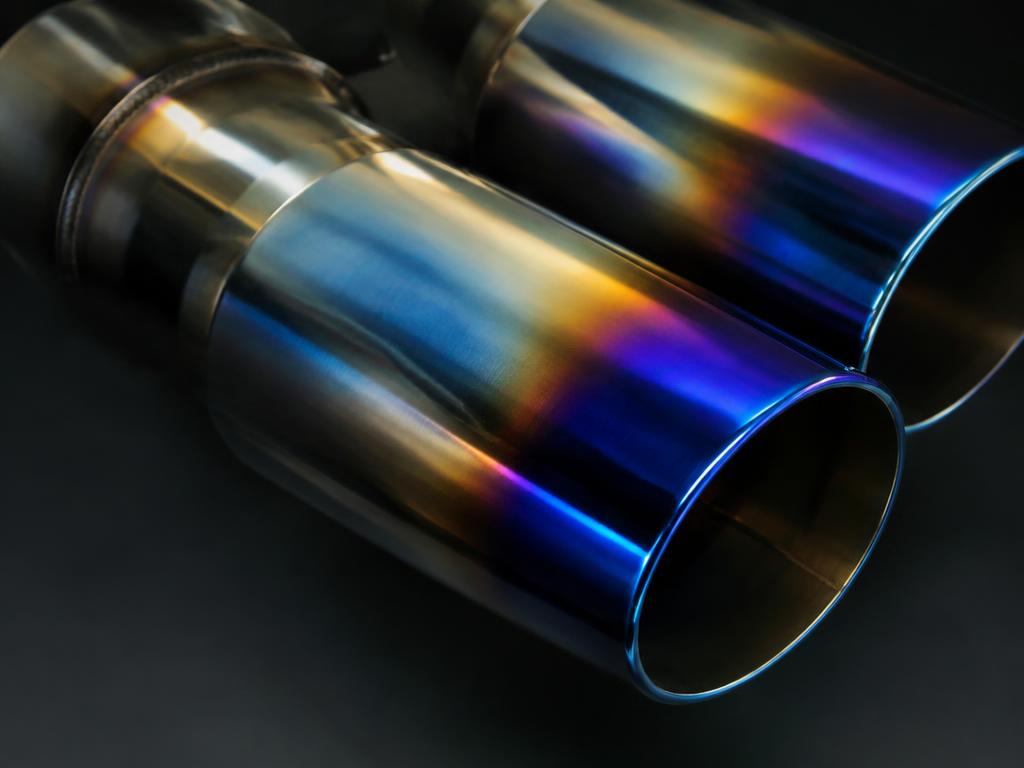
The workhorse titanium alloy — aerospace-born, now forged into connecting rods, valves and race exhausts.
Ti-6Al-4V (Grade 5) composition
Simplified nominal composition; not a certified specification. Broad categories may include several grades.
| Ti | 90% |
| Al | 6% |
| V | 4% |
Properties
Qualitative editorial ratings, not measured design values. Properties depend on grade, product form and condition.
Automotive examples and material context
These examples illustrate applications; confirm the exact grade, component and model year with manufacturer documentation.
Titanium connecting rods allow the flat-six to rev past 9,000 rpm.
First mass-production car with titanium connecting rods.
History
- 1954 — Developed in the US for aerospace
- 1990 — Honda NSX brings Ti rods to production
- 2021 — GT3 992 uses Ti rods at 9,000 rpm
Related alloys
What is Ti-6Al-4V (Grade 5)?
Ti-6Al-4V, also called Grade 5 titanium, is an alpha-beta titanium alloy with nominal aluminum and vanadium additions. It is distinct from commercially pure titanium and from lower-alloyed tubing grades.
Manufacturing and material condition
Forging, machining, heat treatment and surface condition all influence the finished part. Titanium requires controlled joining procedures because contamination at elevated temperature can impair properties.
Automotive applications
Its strength-to-weight ratio makes it relevant to highly loaded lightweight components. Automotive connecting rods and valves illustrate the type of application, but a component drawing or supplier specification is needed to establish the grade in a particular car.
Limitations and selection considerations
Machining cost, fatigue design and operating temperature matter. Titanium is not a direct material substitution for a steel part with unchanged geometry and manufacturing instructions.
How does it compare with other materials?
Compared with Grade 2, Grade 5 generally prioritizes higher strength rather than the same forming characteristics. Compare product condition and design requirements, not only the word titanium.