Titanium · Modern · 1950
Grade 2 Commercially Pure Titanium
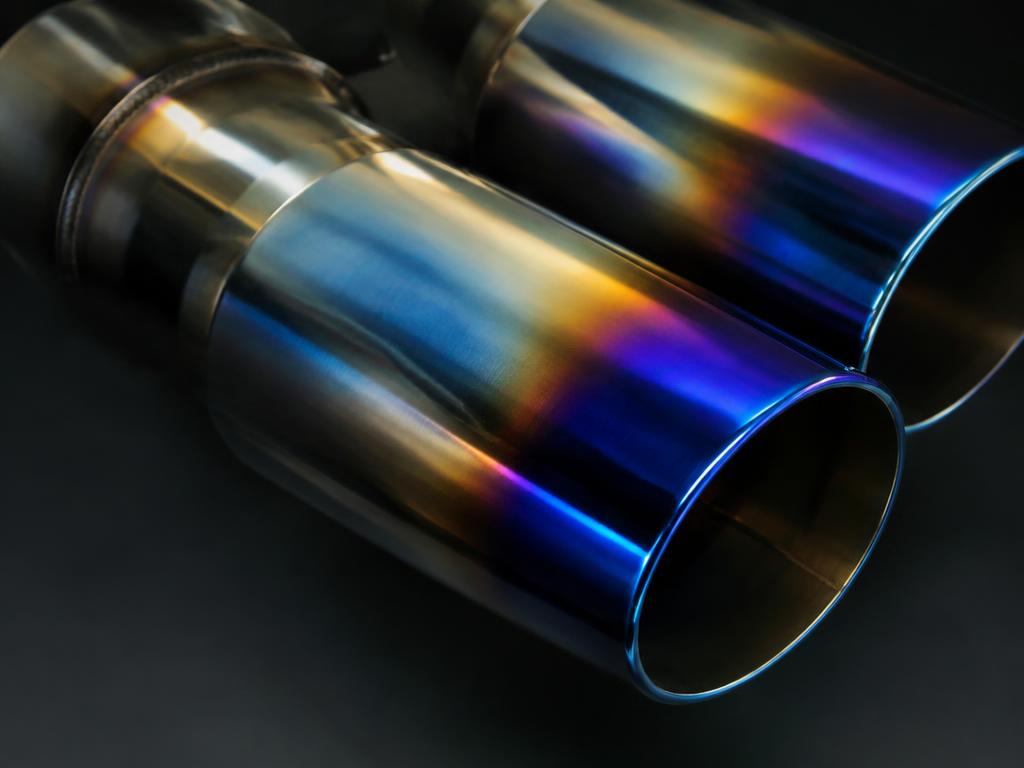
Unalloyed titanium — easy to weld, famous for the blue-purple 'burnt' exhaust tip.
Grade 2 Commercially Pure Titanium composition
Simplified nominal composition; not a certified specification. Broad categories may include several grades.
| Ti | 99.2% |
| Fe | 0.3% |
| O | 0.25% |
Properties
Qualitative editorial ratings, not measured design values. Properties depend on grade, product form and condition.
Automotive examples and material context
These examples illustrate applications; confirm the exact grade, component and model year with manufacturer documentation.
Titanium muffler with signature heat-blued finish.
History
- 1948 — DuPont begins commercial titanium production
Related alloys
What is Grade 2 Commercially Pure Titanium?
Grade 2 is commercially pure titanium, not a deliberately aluminum-vanadium alloy. Small permitted amounts of oxygen, iron and other elements are controlled by its specification.
Manufacturing and material condition
Forming and welding require suitable procedures, despite its distinction from higher-strength alloyed grades. Heat tint is an oxide effect rather than a certificate of composition.
Automotive applications
Corrosion-resistant sheet and tubing illustrate its usefulness. A titanium exhaust description does not establish that all parts are Grade 2.
Limitations and selection considerations
Its strength differs from Grade 5, and temperature suitability depends on the component and environment. Surface color cannot establish weld quality or approved operating conditions.
How does it compare with other materials?
Grade 2 prioritizes a different balance of corrosion resistance and fabrication from Ti-6Al-4V. Commercially pure does not mean chemically perfect 100% titanium.