Titanium · Hypercar · 2018
3D-Printed Titanium
Laser-melted titanium powder grown into topology-optimised parts impossible to machine.
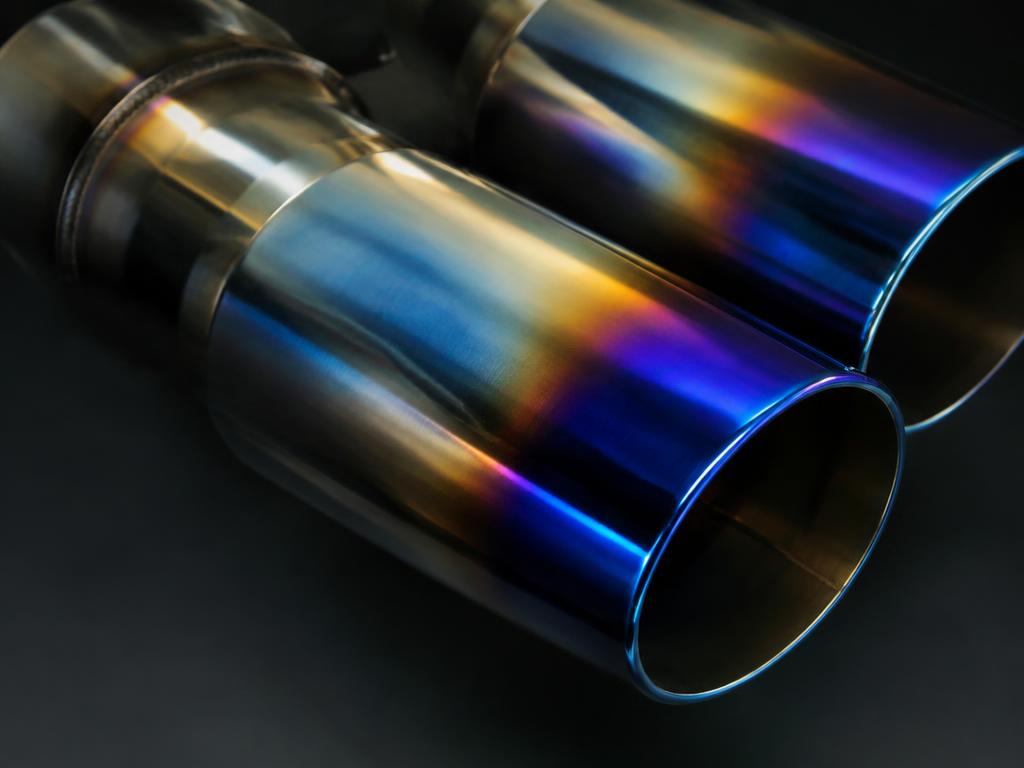
3D-Printed Titanium composition
Simplified nominal composition; not a certified specification. Broad categories may include several grades.
| Ti | 90% |
| Al | 6% |
| V | 4% |
Properties
Qualitative editorial ratings, not measured design values. Properties depend on grade, product form and condition.
Automotive examples and material context
These examples illustrate applications; confirm the exact grade, component and model year with manufacturer documentation.
Printed titanium brake calipers — the largest functional Ti print of its time at 2.9 kg.
History
- 2018 — Bugatti unveils printed brake caliper
- 2022 — Printed Ti suspension uprights in hypercars
Related alloys
What is 3D-Printed Titanium?
3D-printed titanium is a manufacturing category, not a separate chemical alloy. Ti-6Al-4V is one material used in metal additive manufacturing, but the powder specification must identify the actual grade.
Manufacturing and material condition
Powder-bed processes build a part layer by layer. Build direction, support removal, stress relief, subsequent heat treatment and inspection can affect dimensional accuracy and mechanical properties.
Automotive applications
Additive manufacturing can create internal passages and topology-optimized shapes that are difficult to produce conventionally. A printed brake or suspension component still requires qualification for its loading and fatigue environment.
Limitations and selection considerations
An intricate shape or low mass is not proof of roadworthiness. Surface finish, defects, repeatability and post-processing need attention before a safety-critical part enters service.
How does it compare with other materials?
Compare a printed component with a forged or machined component using the same load case and verified testing. Nominal chemistry alone cannot establish equivalent fatigue life.