Steels · Modern · 1984
Press-Hardened Boron Steel
Hot-stamped steel reaching 1,500 MPa — the invisible safety cage of modern cars.
Press-Hardened Boron Steel composition
Simplified nominal composition; not a certified specification. Broad categories may include several grades.
| Fe | 98% |
| Mn | 1.2% |
| B | 0.003% |
Properties
Qualitative editorial ratings, not measured design values. Properties depend on grade, product form and condition.
Automotive examples and material context
These examples illustrate applications; confirm the exact grade, component and model year with manufacturer documentation.
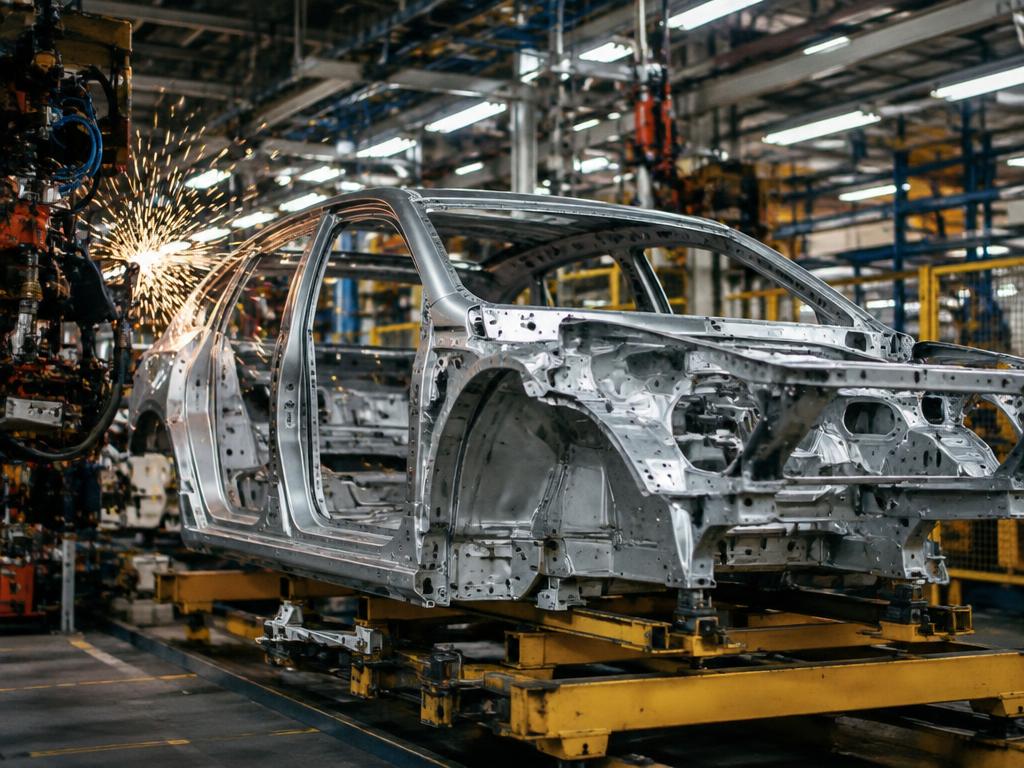
~40% hot-formed boron steel body structure.
History
- 1984 — Saab first uses hot stamping
Related alloys
What is Press-Hardened Boron Steel?
Press-hardened boron steel describes a material-and-process category. Small boron additions support hardenability in suitable steels; boron content alone does not determine final strength.
Manufacturing and material condition
Hot stamping commonly heats a blank, forms it and cools it rapidly in the die. The resulting microstructure and local process control are central to the part's performance.
Automotive applications
Passenger-compartment reinforcements are an important application. A car's body can combine press-hardened parts with more ductile grades designed for other functions.
Limitations and selection considerations
Heating, drilling, straightening or welding a damaged structural part can alter its properties. Repairs must follow the vehicle manufacturer's procedures.
How does it compare with other materials?
Dual-phase steel and press-hardened steel are both relevant to modern structures, but differ in microstructure, forming route and application. AHSS is a broader category.